Staff Mobility
The School of Languages and General Education has collaborated with the Korea International Cooperation Agency (KOICA) Thailand to invite a Korean volunteer, Mr. Kim Ji Hyung, to teach Korean language and culture under the World Friends KOICA Volunteer program. This international cooperation aims to promote global collaboration by sending Korean volunteers to teach and train local people in the Korean language and culture at institutions abroad.
During his time, Mr. Kim Ji Hyung has been teaching the course GED65-117, International Languages and Cultures, which is a free elective course. This course is open to students from all disciplines and years at Walailak University. The goal of the course is not only to provide academic knowledge but also to develop students’ skills in a well-rounded way. The School ensures that all students are aligned with social contexts and global changes.
The school also focuses on skills necessary to become responsible citizens of the 21st century. The course emphasizes the understanding of social developments, philosophical ideas, multiculturalism, and environmental changes, enabling students to adapt themselves to the global society.
In this course, students have the opportunity to learn basic Korean and explore Korean culture through both in-class and extracurricular activities. The course has gained significant interest, with over 100 students enrolled across two groups. This popularity is largely driven by the widespread influence of Korean language and culture, particularly due to the global K-pop phenomenon, which has become well-known in Thailand over the past decade.
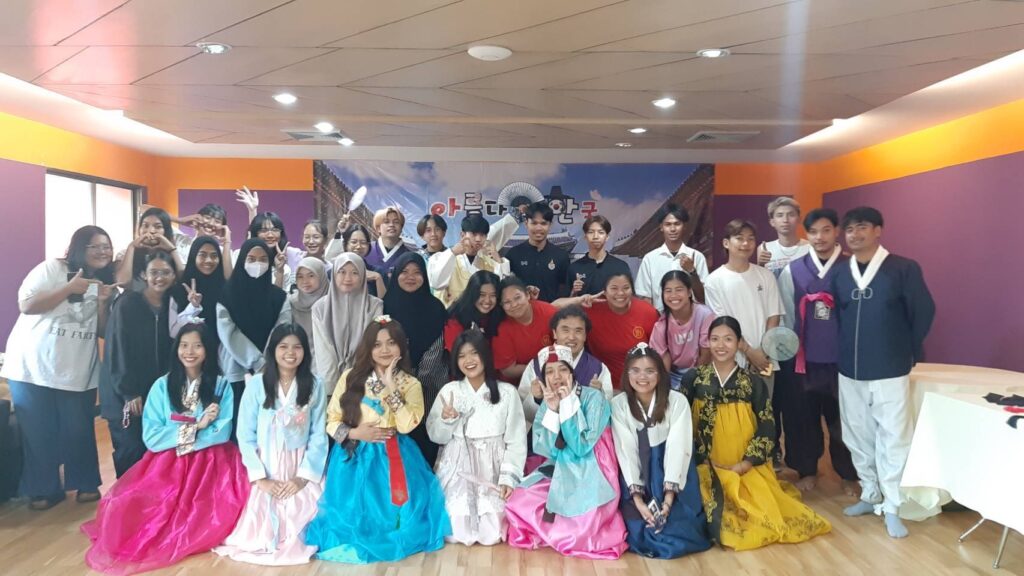
It has now been over a year since Mr. Kim Ji Hyung began his assignment at the School of Languages and General Education. His mission was set to conclude on October 31, 2024, but he has requested an extension until April 2025. Before Mr. Kim completes his assignment, he would like to share his experiences and thoughts on teaching students at Walailak University with everyone.
Can you tell us a bit about yourself and your background?
I studied economics and marketing and worked at a bank for 35 years. Later, I revisited my studies in Korean language and culture and started teaching Korean to foreigners in Seoul. I applied to KOICA, a Korean government agency, and began volunteering abroad.
Why you choose our university?
When applying, I only chose Thailand as my destination. KOICA then assigned me to a university that required Korean language instruction, based on my experience and teaching qualifications. Thailand is highly favored by Koreans due to its stable public security and friendliness toward foreigners, making it a competitive choice among many countries.
How did you imagine our university before coming here?
I knew that Nakhon Si Thammarat was a city with a long history, being the center of Thailand’s ancient capital. Walailak University is known as a prestigious comprehensive university in southern Thailand and the largest in terms of campus area. I learned that the university aims to equip students with specialized knowledge through diverse studies and strives toward globalization.
What aspects of Korean culture do you feel most confident teaching (e.g., language, traditions, history, K-pop, food) and why?
As a Korean language major, I am most confident in teaching the language itself. However, teaching only the letters can overlook the richness of Korean culture. Therefore, I incorporate traditional Korean culture along with K-pop and K-food into my lessons.
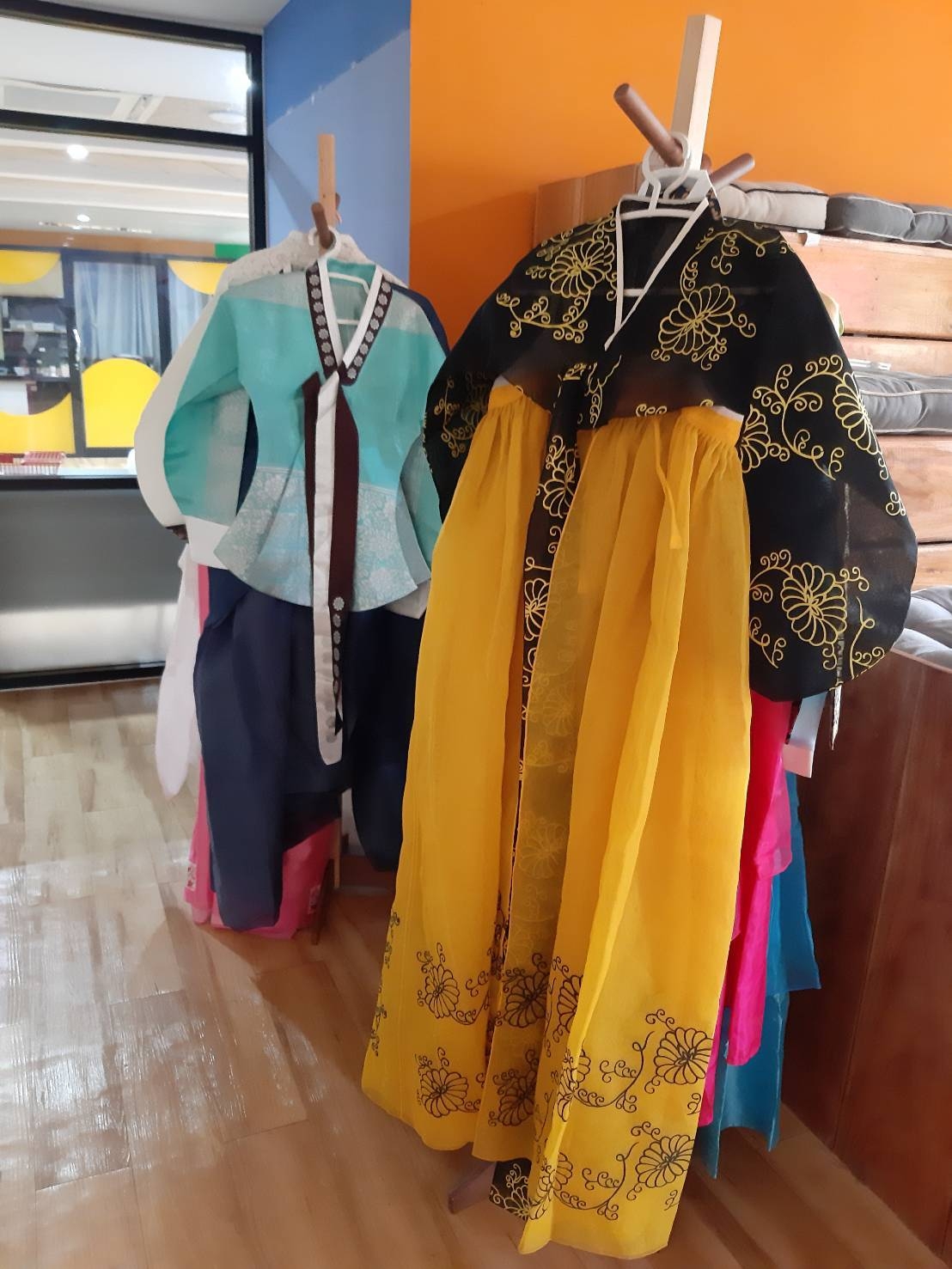
Students especially enjoy participating in cultural activities such as making Korean dishes (tteokbokki, kimbap, japchae) and trying on Hanbok. I also teach other aspects of traditional Korean culture. In the future, I plan to cover the Korean economy alongside the language and culture, and I am continually researching and learning to achieve this goal.
How do you feel after coming to our university? Do you have any stories or experiences to share?
I was surprised by how large the campus is. The first three months passed quickly as I was busy preparing for classes. Riding my bike around the campus, I noticed the buildings painted in yellow, red, and green blending harmoniously with the trees, giving the feeling of a fairy-tale-like school.
The sunset at Bota Park is beautiful, and the sky is mesmerizing, especially after it rains. At lunchtime, I was fascinated by groups of students riding motorcycles, a sight I had never seen before. Sometimes, I sit and watch them pass by.
The kindness and bright smiles from students and professors have made a lasting impression on me. Many people greeted me in Korean, saying “Annyeonghaseyo,” which made me feel very welcomed.
In your opinion, how are Thai students different from Korean students?
Since they are of similar ages, their concerns about the future are quite similar. However, many Thai students relieve stress through sports at the campus facilities, which I find healthier compared to Korean students. Thai students also show remarkable politeness toward their professors, which is very impressive.
On the other hand, Korean students often have additional stress as they prepare for certifications and exams outside of their regular studies to secure employment.
What do you like about Thai culture?
Thailand has many admirable cultural traits. Beyond the well-known aspects like its natural beauty, delicious food, and historical temples, I admire the respect for elders and the consideration shown to others. The “Kreng Jai” culture is deeply embedded here and reminds me of similar traditions in Korea, though these have been fading over time.
I also appreciate the equality and open-mindedness in Thai society, regardless of gender or religion. I am learning a lot from these cultural aspects.
Can you share some Thai words or phrases you’ve learned so far?
I am learning Thai, but I find it challenging as I haven’t had many opportunities to practice speaking. I can read basic words and have simple conversations, but understanding spoken Thai is still difficult. Some words and phrases have left a lasting impression on me, though, and I am continuing to improve.
‘ดีใจ เข้าใจ เกรงใจ เสียใจ ตกใจ
ทุกคน สุภาพ แข็งแรง และมีความสุข มากๆ นะครับ’
What do you hope the students will gain from your lessons?
As a Korean teacher, my goal is to help students achieve basic proficiency in reading and conversational Korean. Korean is relatively easy to learn, and its alphabet, Hangul, with its system of final consonants, is particularly accessible for Thai learners.
Once students can read Hangul, they can continue studying independently. I also hope to introduce them to the diverse cultural aspects that have shaped modern Korea, encouraging them to view different countries from various perspectives.
What lessons or experiences have you gained so far?
Teaching at the university has taught me the importance of warm interpersonal relationships. The kindness and care I have received from people, whether on campus or outside, have motivated me to teach students with more enthusiasm and joy.
This experience has also deepened my patriotism. Living abroad has made me more mindful of my behavior, ensuring I represent Korea positively. I now see things from a broader perspective, making this a valuable chapter of my life.
What inspired your interest in volunteering abroad, particularly in Thailand?
Volunteering abroad has been a lifelong goal for me, and I consider myself fortunate to have been assigned to Thailand. Based on my experience teaching Korean at a university, I plan to continue teaching the language to young people who aspire to work in Korea in the future.