Stories of Nakhon Si Thammarat People through Food and Restaurants
The School of Languages and General Education, led by Assistant Professor Piyachat Suengtee and Dr. Pannyupa Thamwatt, has undertaken the project “Food in Life, Life in the Restaurants of Nakhon Si Thammarat: Stories of Nakhon Si Thammarat People through Food and Restaurants” with the aim of recording and preserving cultural heritage.
This project focuses on recording and preserving cultural heritage as Nakhon Si Thammarat is a city with a long historical development, where different groups of people have come to exchange and interact throughout history. Food is seen as knowledge, the heritage of displaced communities, traditions, and intangible cultural heritage. As humans have a highly conservative organ—the tongue—food naturally follows people from outside into Nakhon Si Thammarat. Examples of food that reflect migration routes in Nakhon Si Thammarat from initial studies include:
Chinese Food – Overseas Chinese in Nakhon Si Thammarat
1. Chinese restaurants in Nakhon Si Thammarat originate from two main groups:
1.1 The first group consists of Teochew-speaking Chinese who originally settled in Nakhon Si Thammarat.
1.2The second group consists of Hainan-speaking Chinese who migrated to Nakhon Si Thammarat due to changes in the rice trading market in Pak Phanang district. This led to the growth of commercial areas in the “Tha Wang” area, particularly in front of the Nakhon Si Thammarat railway station, where many overseas Chinese from Pak Phanang settled. As a result, various types of Chinese restaurants were established, including a large congee restaurant opposite the railway station that operates in the afternoon and evening, forming an essential part of the relationship between food and people in Nakhon Si Thammarat in later periods.
2. Muslim-Malay Food
Muslim-Malay restaurants can be divided into two categories: traditional food and the food culture of the new Malaysian middle class that emerged in the 1990s. Traditional roadside tea and roti shops used to sell breakfast, but in the 1990s, due to Malaysia’s economic changes and the wave of Islamic reformism, Muslim-Malay cultural influences started shaping the food scene in Nakhon Si Thammarat. This gave rise to a new form of Malay cultural restaurants or new Malaysian middle-class culture, transitioning from traditional tea and roti shops or tea shops serving rice with curry to hamburger shops. These hamburger shops differ from the American food culture, representing a new form of restaurant resulting from the migration of people.
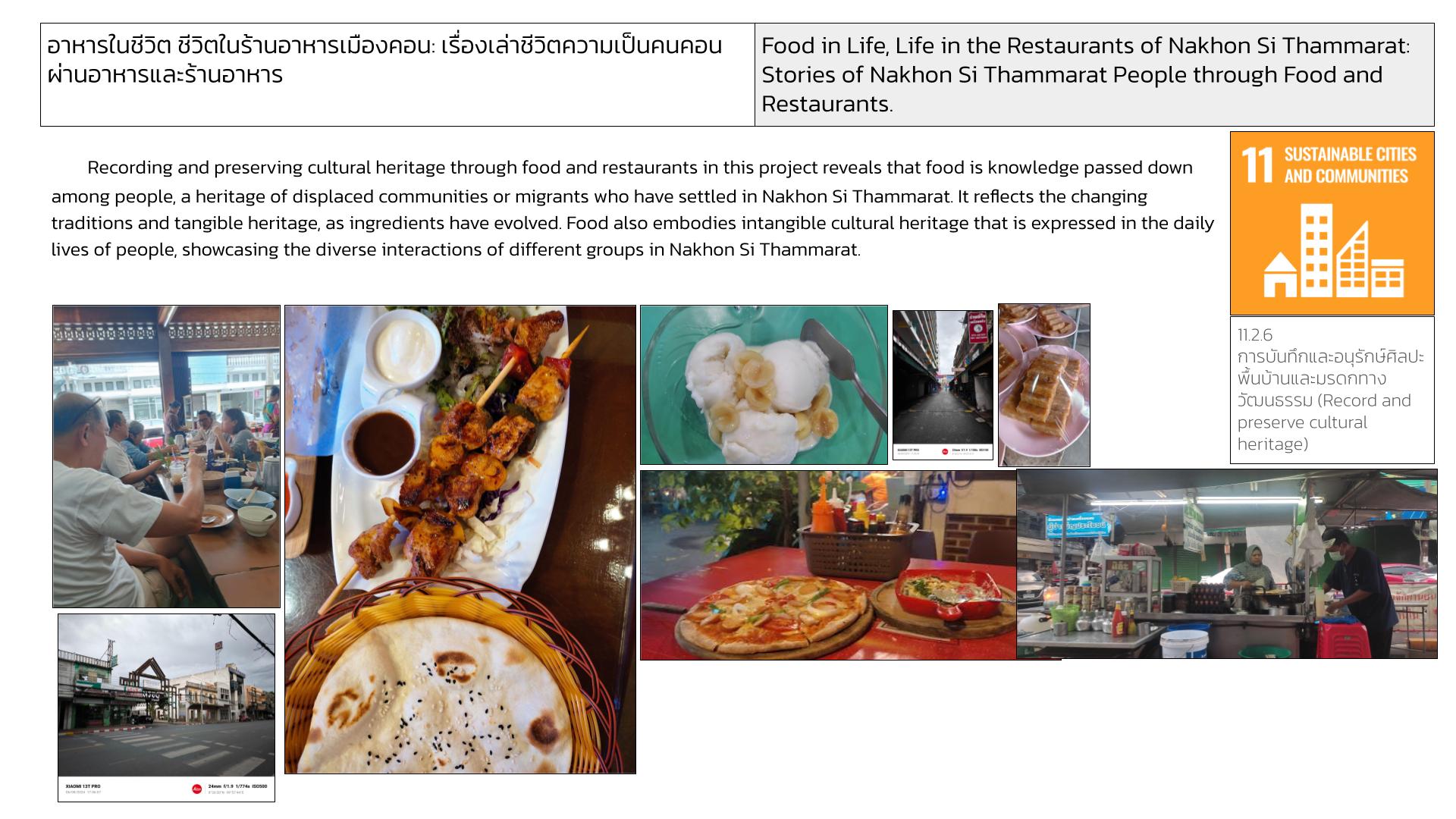
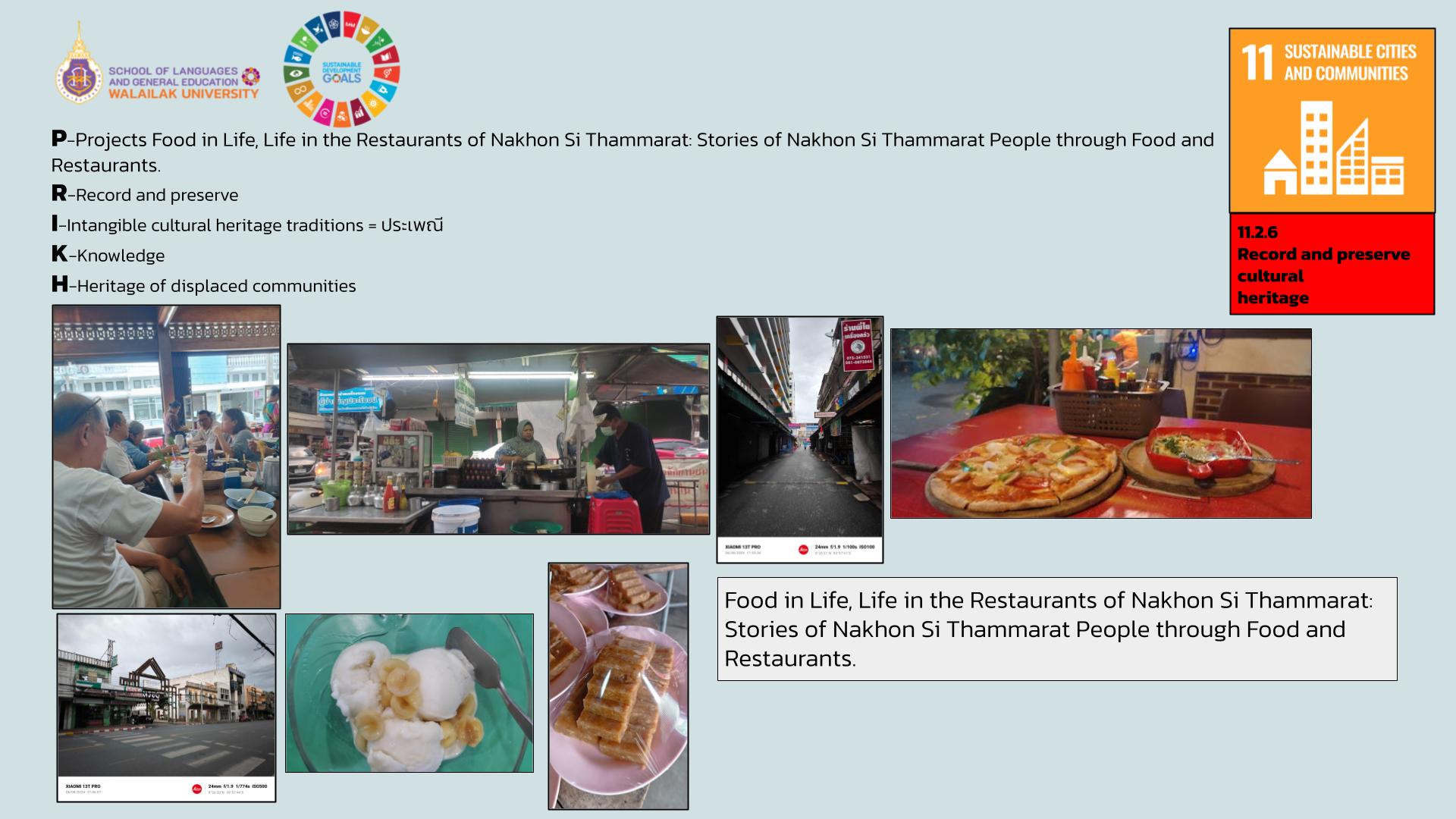
Recording and preserving cultural heritage through food and restaurants in this project reveals that food is knowledge passed down among people, a heritage of displaced communities or migrants who have settled in Nakhon Si Thammarat. It reflects the changing traditions and tangible heritage, as ingredients have evolved. Food also embodies intangible cultural heritage that is expressed in the daily lives of people, showcasing the diverse interactions of different groups in Nakhon Si Thammarat.